
[ad_1]
//php echo do_shortcode(‘[responsivevoice_button voice=”US English Male” buttontext=”Listen to Post”]’) ?>

Consider that there were more than 38,824 automotive fatalities and 115,000 injury accidents in 2020 in the United States alone, according to the U.S. Department of Transportation. Additionally, Bankrate estimates that the economic cost is $474 billion, which includes wage loss, medical and administrative expenses, motor vehicle damage and uninsured costs. The opportunity to prevent 20% to 50% of these tragedies by developing automated driving technology to reduce the loss of valuable lives and the associated economic impact is a necessary goal.
The vision of self-driving cars is there, but the implementation will be more challenging and take longer than expected. Eventually, human ingenuity will overcome the obstacles, but it may not be in a linear manner. By understanding the current reality of automated driving in the near term, companies and ecosystems can better predict the adoption of this transformative technology and make intelligent planning decisions. Too much focus on future technologies can negatively affect vehicle sales because consumers will delay purchases rather than buy cars with automated safety features that benefit them now.
Driving-scenario complexity matters
The automotive industry’s expectations of current and future technologies have been captured in autonomous driving levels (see Figure 1). The lower levels provide much-desired functionalities, such as lane-departure detection, obstacle avoidance, adaptive cruise control and accident-prevention systems with both car and driver involvement. Levels 2+ are considered automated driving. Level 4+ is fully autonomous because it is the car that is responsible for making the driving decisions.
The problem is that cars operate in environments of different degrees of complexity. In the highway scenario, it is possible to reach Level 4 autonomous driving in the near future.
Highway driving is relatively simple compared with the other driving scenarios. Highways have obstacles, such as exit ramps, poorly marked lanes and construction zones. Additionally, there may be accidents or even stationary objects that vehicles must navigate.
Currently, automated driving systems offered by Mobileye, Tesla, Cruise or Kodiak Robotics are technological marvels that can cope with this level of real-world challenges. However, the secondary highway or parking scenarios are more complicated and require additional levels of technology and safety.
By the time you get to urban or inner-city driving, there are so many additional levels of complexity that Level 4+ driving becomes extremely difficult. Today’s technology simply cannot navigate city and road traffic with the current infrastructure. The biggest enemy of a robot is a human being, and this is true for automated cars in city environments because of pedestrians, pets, children and traffic control systems, for starters.
The mistake that current automated driving vendors are making is that they are setting unreasonable expectations by promising a far more general autonomous driving experience too soon. Why not admit that, to achieve fully autonomous self-driving, there are complicated and expensive problems to solve and instead focus on scenarios that are attainable with what is currently available?
Automated driving is not a case of all or nothing. Today’s existing technologies are impressive, helpful and valuable. The same cannot be said for the currently envisioned, full-featured autonomous driving solution.
The best path forward is to focus on the possible, complete the Level 4 highway-driving experience and build up from there. This was the never-executed idea of Elon Musk—driving from New York to Los Angeles in a fully automatic mode. Imagine leaving the San Francisco Bay Area in your automated car and arriving in a suburban Las Vegas parking lot fully rested after a movie and a good night’s sleep. This is exciting and doable.

Unsolved problems arise once drivers leave the easier-to-navigate highway environment. Many variables make automated driving too challenging beyond the readily predictable confines of the freeway.
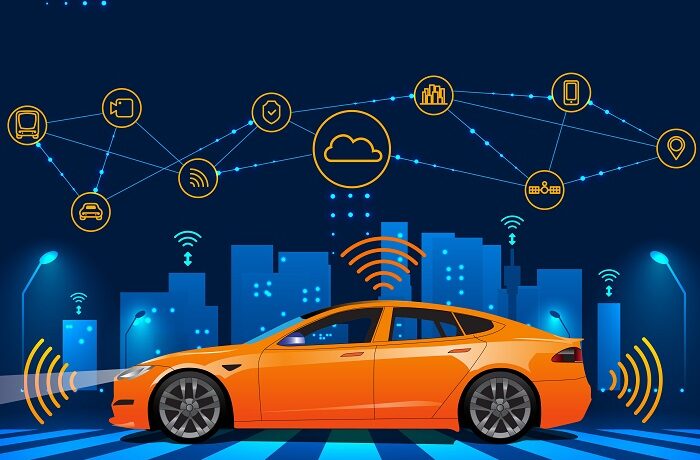
General-purpose, autonomous driving in city scenarios is presently beyond reach in the typical, everyday use case. City driving with a mixture of human-controlled and self-driving cars is simply too complex to be addressed with the current technology and infrastructure. Making general-purpose, fully autonomous city driving a reality will require car manufacturers to work closely with federal, state and local governments to create smart cities requiring road and infrastructure upgrades. Both government and businesses must partner to achieve safe inner-city driving—for example, linking stoplights and vehicle electronics to act in a coordinated manner. In other words, for automated driving to practically work in cities, they will have to be redesigned.
The rise of smart cities will also require additional sensors and electronics, which will benefit the semiconductor industry. The automated driving infrastructure technology market may be even larger than that for the automated car itself. Creating internet-connected cars and the associated infrastructure will take a great deal of time. It will happen because the safety, efficiency, convenience and economics are so compelling. However, transforming transportation toward full automation will be a long process—perhaps 20 years or longer.
Marketing to the automated driving reality brings profits today
By focusing on what can be done now instead of promoting what will be possible in the future, the automotive market can escape a fall in expectations. Drivers are favorably predisposed toward automated driving but will be quickly disappointed if not followed up by functioning technology. Marketing to the hype of fully autonomous vehicles will not help sell products but instead diminishes the interest of many consumers with dissatisfied expectations.
The ability to drive at Levels 2 and 3 on major and even well-constructed secondary highways and some geofenced areas is already economically and technologically viable, as shown in Figure 2. The automated driving vehicle market should focus on completing highway-driving scenarios at affordable prices for the typical consumer. Corner case handling, such as highway repair, on-ramp/off-ramp driving and difficult weather conditions, can quickly be solved with sufficient focus. A complete highway automated solution should also navigate poor or non-existent lane markings, recognize stationary emergency vehicles and avoid accidents in general.

What comes next
The evolution of automated driving will proceed in steps. The next phase is incremental advancements that handle automated driving on secondary highways with traffic lights and variables like bicyclists and pedestrians. Consumers would welcome these near-term improvements, which could result in a significant increase in sales for automakers. Fully automated parking is fairly close and existing lots can easily be modified. Pulling up to a shopping center and commanding the car to find an available space would be invaluable. The driver could summon the car for pickup after shopping. These capabilities improve safety and the overall driving experience. Airport and other transportation parking are additional applications. Fully automated shuttles should be feasible in the next few years.
Geofenced automated driving is another achievable next step. If only self-driving vehicles were allowed on a road, many challenges and potential safety corner cases would be removed. Another application is an inner city that allows only pedestrians and fully automated vehicles. Retirement communities are another geofenced automated driving possibility. Such successes would build confidence in customers, regulators and ecosystem partners. Autonomous driving in a mixed-traffic, city environment is demanding and will take time to get right. A realistic automated driving roadmap should still arrive at a generally connected-car solution but many years later than anticipated.
Engineers delivering on the promise of automated driving technology is exciting, relevant and valuable. At the same time, it is necessary to be practical and understand that full-blown, self-driving solutions are complex, expensive and require challenging solutions. Autonomous driving will happen, but the creation of connected cars and transportation networks will be best served by practical engineering, realistic marketing and achieving doable steps in an orderly fashion.
Still, the creation of the Internet of Cars transportation network is one of the largest technology opportunities of the next few decades. Nothing is more powerful than an idea whose time has come.
[ad_2]
Source link
